

I’m writing this as I’m digesting the news: Donna Adelson was found guilty of murdering my friend and colleague Dan Markel. She joins four other people convicted as part of this case: Sigfredo Garcia and Luis Rivera, the murderers for hire; Katie Magbanua, the intermediary; Charlie Adelson, Danny’s brother in law, and the action man in procuring the hit; and now Donna. Two members of the Adelson family remain uncharged in this matter: Wendi, Danny’s ex-wife, whose contentious divorce proceedings made Danny the target of the Adelson family.
I won’t rehash the facts of the case–they have been widely reported in the media and you can look them up. What’s interesting to me, though, is what this case suggests in terms of the limits of our theory of criminal accountability.
Let’s take the prosecution’s closing argument:
At this point, only Donna is on trial, and therefore the prosecutor, Georgia Cappleman, has to highlight the parts that involve her, specifically. But you’ll see that much of the closing argument revolves around Charlie and his part in the crime. It’s impossible to talk about Donna’s part in isolation from the role played by everyone else, even as criminal law requires doing so because we only convict individuals on the basis of their individual actions and mental states.
Throughout the day, as I was following the arguments in real time, I was worried that this closing would backfire and that the jury would be concerned that not every aspect of this horrific crime can be traced back, and attributed, to Donna. But it looks like the jurors intuitively understood what I was thinking about the whole time: it is impossible to understand this crime without understanding the dynamics in the Adelson family.
Family Systems Theory is a therapeutic approach in which the unit of analysis is not the individual, but rather the family. The behaviors, communication patterns, thoughts, and emotions of the family members are interconnected. Some patterns are lateral and some are intergenerational, but no individual stands on their own; there is always a tension between a person’s individual identity and emotional autonomy and how the person operates as part of a web of family relationships.
From a family systems perspective, the roles and patterns among the Adelsons are set and calcified: Harvey is the silent, passive partner. Donna is the mover and shaker. Charlie is the dependable action man. And Wendi is the fragile child who needs protection. Without understanding this division of labor, it’s impossible to fathom why Donna was so involved in Wendi’s life, to the point of picking guys to date for her and impersonating her at the bank; why the three “adults” volunteered to bribe Danny to allow Wendi to relocate in three equal parts, without Wendi, an adult mother of two children, chiming in; why mother and son have conversations about how to deal with a possible blackmailer and do not involve daughter and father.
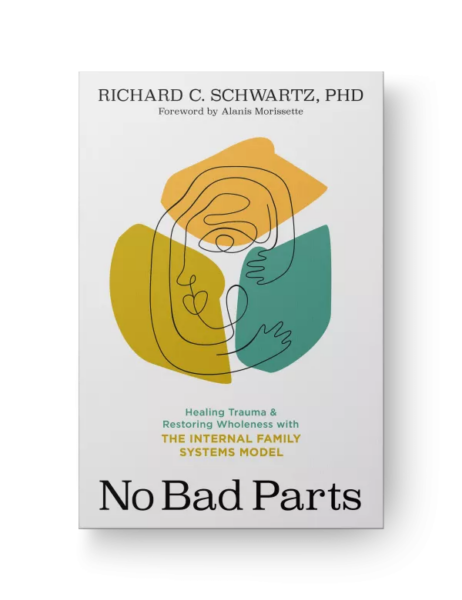
There’s a book by Richard Schwartz called No Bad Parts, whose main thesis imports the notion of family systems into understanding the individuals. Schwartz posits that we are all born with “sub-minds–or parts” and that “[t]hese parts are not imaginary or symbolic. They are individuals who exist as an internal family within us.” Schwartz even provides a typology of these parts: Managers (protective parts that try to control our environment), Firefighters (reactive parts that emerge in crisis), and Exiles (wounded parts that carry our pain and trauma). None of these is inherently “bad”; they all develop for protective reasons and deserve understanding and their own place under the governance of the self.
Viewing the Adelson family through this lens sees the archetypes as occupying parts in protecting and contributing to a dysfunctional, monstrous collective – if you will, no good parts. Even as some family members end up convicted and others acquitted, the legal analysis fails to capture the picture because its unit of analysis is too small.



No comment yet, add your voice below!